 Cardiovascular Physiology Concepts, 3rd edition textbook, Published by Wolters Kluwer (2021)
 Normal and Abnormal Blood Pressure, published by Richard E. Klabunde (2013)
The Pharmacologic Treatment of Hypotension
- THIS PAGE: Definition of Hypotension and its Causes
- Page 2: Rationale for Pharmacologic Treatment of Hypotension
- Page 3: Drugs Used to Treat Hypotension
Definition of Hypotension and its Causes
Hypotension is a physiologic state in which the arterial blood pressure is abnormally low. For an adult, hypotension exists when the systolic pressure is less than 90 mmHg and the diastolic pressure is less than 60 mmHg. Because arterial pressure is determined by cardiac output, venous pressure and systemic vascular resistance (Click here for more details), a reduction in any of these variables can lead to hypotension.
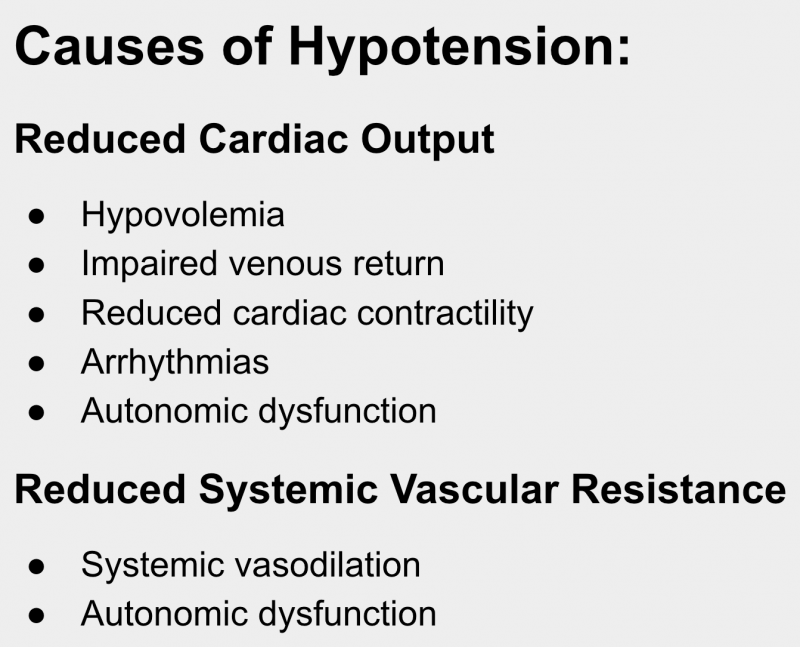
Causes of hypotension include:
- Hypovolemia caused by hemorrhage or dehydration (reduces venous pressure and cardiac output).
- Impaired venous return caused by postural changes, gravitational forces, or venous obstruction (reduces venous pressure and cardiac output).
- Reduced cardiac contractility caused by heart failure, myocardial ischemia, or autonomic dysfunction (reduces cardiac output).
- Arrhythmias that reduce heart rate or impair ventricular filling (reduce cardiac output)
- Reduced systemic vascular resistance because of loss of sympathetic tone caused by drugs, autonomic dysfunction, or vasodilation caused by sepsis (septic shock) or anaphylaxis.
Go to Next Page
Rationale for Pharmacologic Treatment
Revised 01/14/2024
 Twitter
 Telegram
 LinkedIn
 WhatsApp
 Facebook
 Reddit