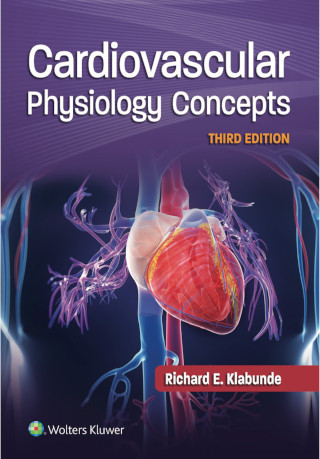
 Cardiovascular Physiology Concepts, 3rd edition textbook, Published by Wolters Kluwer (2021)
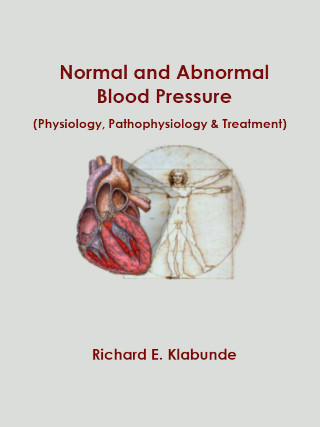 Normal and Abnormal Blood Pressure, published by Richard E. Klabunde (2013)
Guided Learning - Pharmacologic Treatment of Arterial Hypertension
(NOTE: Turn off or override browser pop-up blockers.)
Pathophysiology of Arterial (Systemic) Hypertension
- What is hypertension? click here
- What is the difference between essential and secondary hypertension? click here
- What are several causes of secondary hypertension? click here
- How do changes in cardiac output and systemic vascular resistance influence mean arterial pressure? click here
- How do changes in blood volume affect arterial pressure? click here
- What are systolic and diastolic aortic pressures? click here
- What factors determine central venous pressure? click here
- How do autonomic nerves regulate arterial pressure? click here
- How do arterial baroreceptors regulate arterial pressure? click here
- What roles do the following humoral factors play in regulating arterial pressure?
- How does each of the following cause hypertension? click here
- renal artery stenosis
- chronic renal disease
- primary hyperaldosteronism
- stress
- sleep apnea
- hyper- or hypothyroidism
- pheochromocytoma
- preeclampsia
- aortic coarctation
Antihypertensive Drugs
- How do drugs that dilate blood vessels, reduce blood volume, or reduce cardiac output lead to a decrease in arterial pressure? click here
- How do diuretics decrease blood volume? click here
- What are the differences between thiazide, loop, and potassium-sparing diuretics in terms of their site of action in the kidney and their overall efficacy in lowering blood pressure? click here
- By what mechanisms do each of the following mechanistic classes of drugs lower arterial pressure? What specific drugs (generic names) are FDA-approved in each of these classes? Which of the following can cause orthostatic hypotension and reflex tachycardia?
- alpha-adrenoceptor antagonists (alpha-blockers)
- angiotensin converting enzyme inhibitors (ACE inhibitors)
- angiotensin receptor blockers (ARBs)
- beta-blockers
- calcium-channel blockers
- centrally acting sympatholytics
- direct acting arterial dilators
- ganglionic blockers
- nitrodilators
- potassium-channel openers
- renin inhibitors
Revised 10/28/2023
 Twitter
 Telegram
 LinkedIn
 WhatsApp
 Facebook
 Reddit